






Getting Pregnant While Managing Anxiety: A Practical Guide


If you're trying to get pregnant and anxiety is always with you, you're not alone. The two-week wait, tracking temperatures, negative tests, and advice to "just relax" from well-meaning people all add up to a unique kind of stress that's hard to explain unless you've experienced it.
Most fertility resources don't mention this, but feeling anxious while trying to conceive is very common. It doesn't mean you won't get pregnant. It does mean your emotional health is just as important as tracking your ovulation.
- Does Anxiety Actually Affect Fertility?
- Recognizing Anxiety While Trying to Conceive
- What You Can Do This Week: A Practical Toolkit
- When to Seek Professional Support
- The Part No One Talks About: Anxiety After a Positive Test
- You Deserve Support at Every Stage of This Journey
- FAQ: Getting Pregnant While Managing Anxiety – Common Questions
A 2025 study found that 73% of people trying to conceive without treatment felt some level of anxiety about it. Managing this anxiety isn't a luxury – it's an important part of preparing for pregnancy.
| What you might be wondering | What the research actually says |
|---|---|
| "Is my anxiety making it harder to get pregnant?" | Every day stress alone has not been shown to delay conception in women with no underlying fertility issues. |
| "What if I feel anxious every single cycle?" | You're not alone - over 73% of women trying to conceive report the same level of anxiety as women going through IVF. |
| "Could stress be affecting my hormones?" | Severe, prolonged stress can temporarily disrupt ovulation hormones, but normal conception anxiety rarely reaches that threshold. |
| "What if both my partner and I are stressed?" | Couples where both partners report high stress do show lower conception rates - which is why support for both of you matters. |
| "Am I the only one not getting support?" | Nearly 1 in 3 women trying to conceive want emotional support and aren't getting it. The gap is real, and it's not just you. |
This guide covers what the research actually says about anxiety and fertility, how to recognize when anxiety has crossed into territory that needs support, and concrete tools you can use this week to feel more in control of the one part of this journey you can actually influence: your nervous system.
Does Anxiety Actually Affect Fertility?
Many women worry about this, and the real answer is more complicated than most articles suggest.
The short version: everyday perceived stress, on its own, has not been consistently shown to prevent conception in women with proven fertility. A preconception cohort study published in PMC following 4,769 couples found that even women with the highest perceived stress scores had no statistically significant reduction in their probability of conceiving. That's genuinely reassuring data, and it's worth sitting with.
There's more to the story, though.
A 2025 study in Human Reproduction Open, following 966 couples for one year, found that when both partners reported elevated stress, fecundability (the probability of conceiving in a given cycle) was 24% lower. The keyword is "both partners" - the effect was most pronounced in couples with lower socioeconomic status, suggesting that compounding pressures, not anxiety alone, drive the association.
More specifically: a one standard deviation increase in a woman's stress score linked to 13% lower fecundability, and depression scores linked to 10% lower, both strongest when combined with financial or educational stressors.
Research shows that feeling nervous during your fertile window won't stop you from getting pregnant. However, ongoing stress is worth addressing – not because anxiety blocks fertility, but because it can affect your quality of life, your relationships, and important habits like sleep, nutrition, and intimacy.
One more thing worth knowing: stress and your cycle are in a two-way conversation. Chronically high cortisol can suppress the hormonal signals that trigger ovulation - and the same hormonal fluctuations that affect your fertility also shape how your anxiety feels throughout the month. Soula's piece on how cortisol and estrogen interact explains that dynamic in full, and understanding it tends to reduce the sense that something is mysteriously wrong with your body.
Recognizing Anxiety While Trying to Conceive
Anxiety about trying to conceive feels different from regular life stress. It doesn't always look like what people usually imagine when they think of anxiety.
According to research published in PMC in 2025, over 73% of women trying to conceive without fertility treatment reported some level of conception-specific anxiety, a rate comparable to women actively undergoing IVF.
Cycle-driven anxiety spikes: Anxiety that follows a predictable pattern, rising during the two-week wait, peaking around testing time, and crashing after a negative result. It's tied directly to the hormonal and emotional rhythm of the cycle.
Hypervigilance about symptoms: Obsessively tracking every twinge, cramp, or change in energy as a potential early pregnancy sign. This often starts as hopeful attention and gradually becomes exhausting.
Avoidance behaviors: Withdrawing from friends who are pregnant, or from conversations about the future, because the uncertainty feels too painful to engage with.
Intrusive thoughts: Recurring fears about infertility, about whether something is "wrong," or about what happens if it never works. Hard to redirect, unlike normal worry.
It's important to point out that anxiety while trying to conceive often leads to feeling more isolated, and that isolation can make anxiety worse. A Canadian survey found that women planning pregnancy who felt anxious were much more likely to feel lonely and tired, which adds to the emotional burden of the process.
It's also important to know that anxiety doesn't always end once you get a positive pregnancy test. Your nervous system doesn't just reset overnight. Soula's guide to anxiety during pregnancy explains what to expect next.
What You Can Do This Week: A Practical Toolkit
Managing anxiety while trying to conceive isn't about being perfectly calm all the time. It's about creating daily habits that lower your stress and make the waiting easier.
Regulate your nervous system daily, not just in crisis
The most effective anxiety interventions work through consistent, small-dose practice:
- Diaphragmatic breathing (4-7-8 pattern): Breathe in for 4 counts, hold for 7, and exhale for 8. Just two minutes before bed or after a negative test can lower cortisol. If this feels harder in the late luteal phase, it's not your fault – your body's chemistry is simply different at that time.
- Progressive muscle relaxation: Particularly effective for women whose anxiety manifests physically as tension, jaw clenching, or disrupted sleep.
- Mindfulness-based check-ins: Brief daily check-ins that name what you're feeling without judgment. Research consistently shows that labeling emotional states reduces their intensity.
- Cycle-aware movement: Gentle movement during the luteal phase rather than high-intensity exercise, which can add physiological stress at a time when the body is already working hard.
Reframe the two-week wait
For most women, the two-week wait is the most stressful part of the cycle, and it's also the part you can't control. The best way to look at it is to remember you've already done everything you can this cycle. Practically: plan something absorbing for the second week of your wait. Set a single testing date and commit to it. Identify one person you can be honest with, who won't offer unsolicited advice.
Track your anxiety alongside your cycle
When you notice that your anxiety always rises in the luteal phase, it becomes just another piece of information instead of a crisis. Realizing this is a pattern you can plan for, not a personal flaw, can be very empowering.
Before your next cycle, ask yourself: when during the month do I usually feel most anxious about trying to conceive? Is there a pattern? For most women, there is – and seeing it clearly often makes it feel less overwhelming.
Soula tracks these patterns across cycles automatically, so instead of trying to remember whether last month's luteal phase felt this bad, you have actual data. The app's breakdown of what happens to your mental health in each phase of your menstrual cycle is useful context for understanding what you're looking at.
Address sleep as a non-negotiable
Sleep disruption is both a symptom of anxiety and one of its primary drivers. For women trying to conceive, poor sleep also affects the hormonal balance that supports ovulation.
Keep a consistent wake time, even on weekends. Remove fertility tracking apps and social media from the hour before bed. Use a body scan or guided relaxation specifically at bedtime.
When to Seek Professional Support
Consider reaching out to a therapist or mental health professional if:
- Anxiety is consistently disrupting your sleep, appetite, or ability to function at work
- You're avoiding intimacy with your partner because sex has become purely goal-oriented and stressful
- You're experiencing intrusive thoughts about infertility that you cannot redirect
- You've had a pregnancy loss and find the grief is intensifying rather than easing over time
This research gap is important: A 2025 PMC study found that nearly one in three women trying to conceive without fertility treatment wanted emotional support, but most mental health resources focus on IVF patients. If you're trying naturally and finding it hard, you still deserve support. The system just hasn't caught up yet.
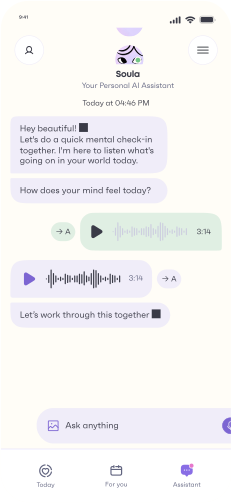
CBT is the most proven approach for anxiety related to trying to conceive. If regular therapy isn't an option, AI-supported emotional check-in tools can help between sessions or even on their own. The most important thing is to be consistent – short daily check-ins work better than one long session each week.
Many women want something made just for TTC anxiety – not just general anxiety apps or fertility trackers, but a tool that supports the emotional side of trying to conceive without making it feel clinical. Soula offers daily check-ins that adjust to your cycle, tracks your mood and anxiety over time, and gives you real-time tools for the most stressful moments. Everything stays private unless you choose to share, which is important if you're not ready to talk about this with others.
Talking to your partner
A 2025 study in Human Reproduction Open found that couples where both partners felt stressed had much lower conception rates than couples where only one partner was stressed. Try setting aside ten minutes each week to talk about how you're both feeling – not about tracking, timing, or logistics, but just your emotions.
The Part No One Talks About: Anxiety After a Positive Test
Most guides act like a positive pregnancy test is the end of the journey. But for women who have been anxious while trying to conceive, it can actually be the start of a new set of worries.
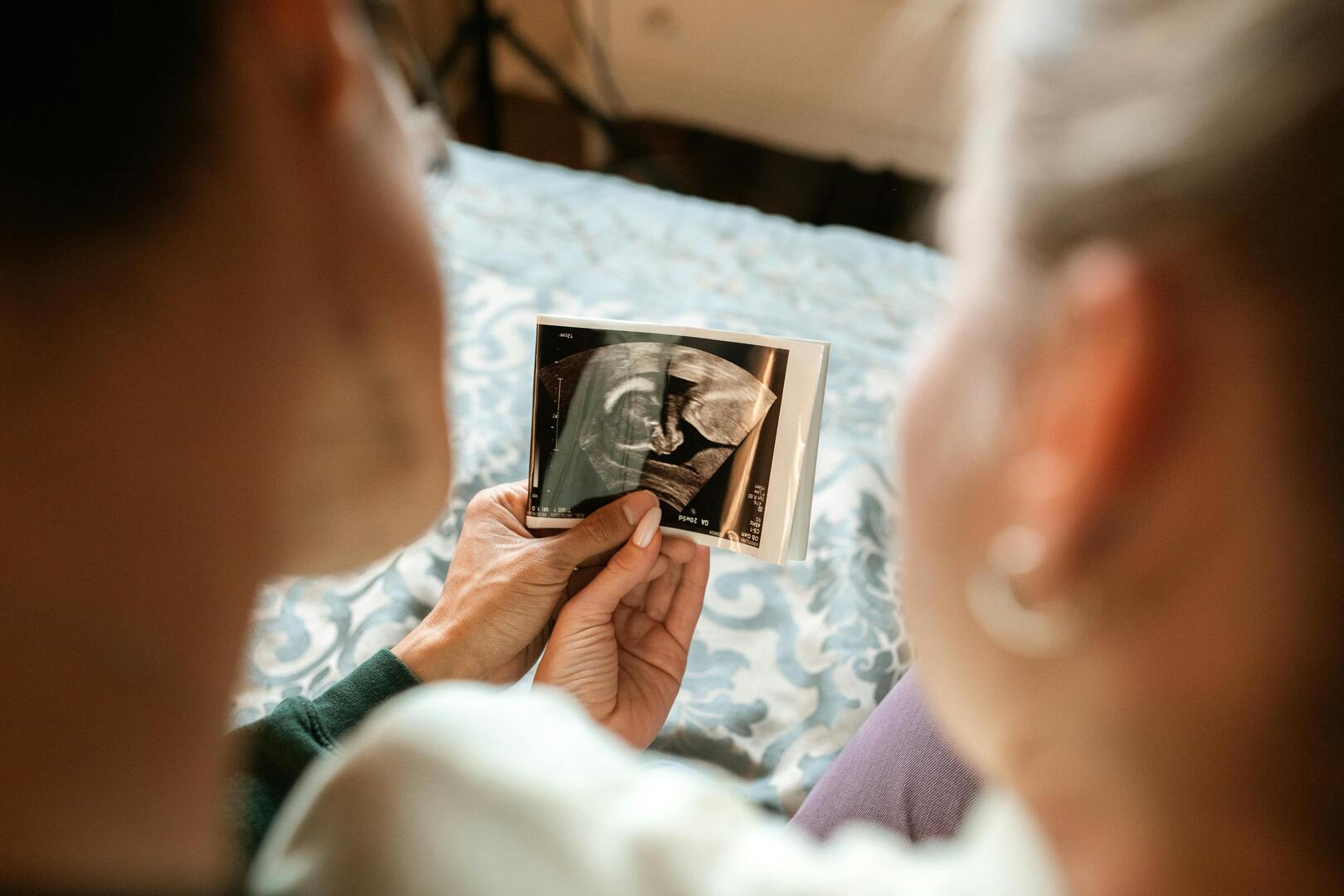
After months of hoping, a positive test can bring up strong fears of loss, disbelief, or trouble feeling happy because you've gotten used to expecting disappointment. This is sometimes called "pregnancy after loss anxiety" or "earned optimism" – when past disappointments make it hard to trust good news. It helps to make a plan now for how you'll support your mental health in early pregnancy: talk to your doctor about your anxiety history at your first appointment
- Continue daily emotional check-in practices rather than assuming the anxiety will resolve on its own
- Give yourself explicit permission to feel cautious, rather than pressuring yourself to feel immediately happy
Your nervous system doesn't just reset when you get a positive test. Soula's full guide to anxiety during pregnancy continues from here, explaining what normal pregnancy anxiety looks like, when to seek help, and how to manage it through each trimester.
You Deserve Support at Every Stage of This Journey
The evidence is clear: everyday anxiety doesn't usually stop you from getting pregnant. But it can make the process harder than it needs to be.
Nearly one in three women trying to conceive are looking for emotional support and not finding it. Building a daily practice now, whether that's nervous system regulation, cycle-aware mood tracking, or simply having one honest conversation per week with your partner, is not a detour from your goal. It is part of how you get there.
Soula tracks your mood and anxiety across cycles so you can see patterns instead of just feeling overwhelmed. It offers exercises right when you need them, and matches support to your hormonal cycle – so what you get in your luteal phase is different from your follicular phase. It's available anytime and is completely private.
You don't have to wait until things feel unmanageable to ask for support. Starting now is the practical choice.
FAQ: Getting Pregnant While Managing Anxiety – Common Questions
Can anxiety stop you from getting pregnant?
Everyday anxiety on its own has not been consistently shown to prevent conception in women with no underlying fertility issues. A large NIH-published study found no significant difference in time to pregnancy between women with high, moderate, or low daily stress levels. What the research does flag is chronic, compounding stress - particularly when it disrupts sleep, suppresses libido, or affects health behaviors - as worth addressing directly.
Does anxiety affect ovulation?
High levels of cortisol can interfere with the hormones that trigger ovulation, specifically luteinizing hormone (LH) and follicle-stimulating hormone (FSH). In cases of severe or prolonged stress, this can lead to irregular cycles or sporadic anovulation. For most women experiencing everyday conception anxiety, the effect on ovulation is temporary.
How common is anxiety while trying to conceive?
Very common. Research published in PMC in 2025 found that over 73% of women trying to conceive without fertility treatment reported some level of conception-specific anxiety, comparable to women actively undergoing IVF. If you're struggling emotionally, you are firmly in the majority.
Should I tell my doctor about anxiety while trying to conceive?
Yes. Preconception appointments are an underused opportunity to discuss mental health. Your doctor can rule out any physical contributors to cycle irregularity, refer you to a therapist if needed, and advise on whether any medications you're taking for anxiety are safe during conception and early pregnancy. Tommy's, the UK pregnancy charity, notes that common antidepressants such as sertraline have no evidence of reducing fertility, which is reassuring for women who need medication support.
What is the fastest way to reduce anxiety during the two-week wait?
Diaphragmatic breathing practiced daily (not just in moments of crisis), committing to a single test date rather than testing repeatedly from day 8, planning something genuinely absorbing for the second week of the wait, and having one honest conversation with your partner about how you're each feeling. Daily emotional check-ins tied to your cycle phase, such as those offered through Soula, can also help you recognize anxiety patterns before they peak.
cope with any stress
Don't postpone self-care!
Download the app now!











and inner peace in all areas of your life,
regardless of your age